
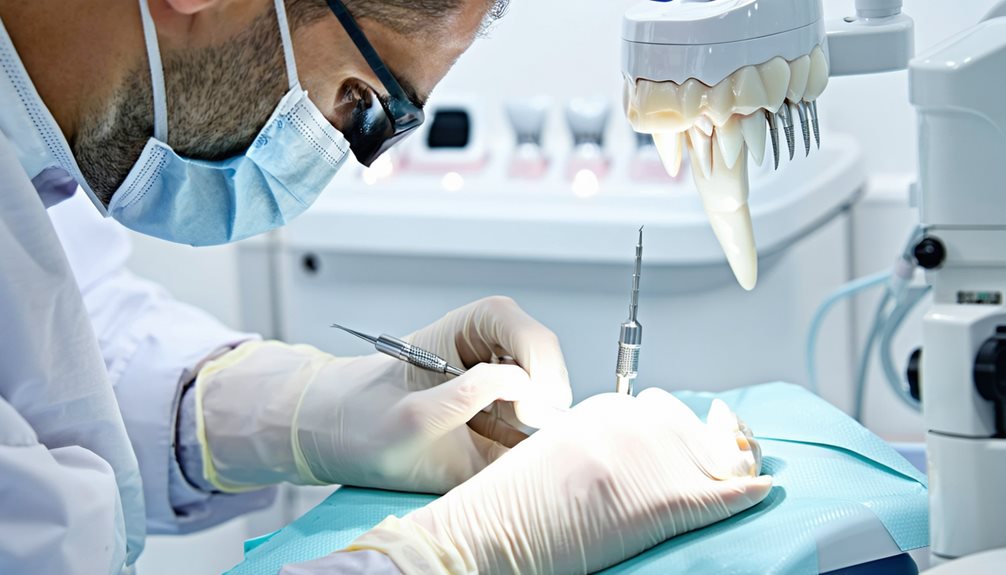
Oral surgeons excel in cosmetic procedures due to their mastery in advanced surgical techniques and specialized training that encompasses thorough facial anatomy. They employ minimally invasive methods and innovative anesthesia techniques to reduce recovery times and enhance patient comfort. Precision instruments and technologies such as 3D cone-beam computed tomography allow for meticulous planning and execution. Surgeons integrate tissue engineering and biomaterials to accelerate healing and improve aesthetic outcomes, along with collaborative efforts involving multidisciplinary teams to refine facial symmetry and balance. An understanding of these elements not only sets oral surgeons apart but also further enhances the clinical outcomes they achieve.
Advanced Surgical Techniques
In recent years, oral surgeons have increasingly adopted advanced surgical techniques to enhance cosmetic outcomes, particularly in maxillofacial and dental procedures. These advancements are characterized by the integration of minimally invasive methods, which prioritize patient comfort and reduce recovery times.
Minimally invasive procedures, such as endoscopic approaches and laser surgery, allow for precise manipulation of tissues with minimal disruption, thereby optimizing aesthetic results while decreasing postoperative complications.
A significant component in these advanced techniques is the focus on tissue regeneration, which has revolutionized oral surgery’s cosmetic applications. Tissue engineering and biomaterials play vital roles in promoting regenerative processes, fostering the restoration of natural contours and function.
The application of autologous growth factors, such as platelet-rich plasma, enhances cellular proliferation and differentiation, expediting the healing process and improving the integration of grafts.
Moreover, advancements in imaging technology, including 3D cone-beam computed tomography, enable meticulous preoperative planning, guaranteeing precise execution of surgical interventions.
This technological synergy guarantees that oral surgeons can deliver outcomes that align with the highest standards of aesthetic excellence. As the field continues to innovate, these techniques will likely become more refined, further solidifying their role in cosmetic oral surgery.
Specialized Training Programs
Specialized training programs for oral surgeons focusing on cosmetic applications are meticulously designed to enhance proficiency in advanced surgical techniques and extensive facial anatomy.
These programs integrate rigorous curricula that emphasize precision in aesthetic outcomes and a thorough understanding of complex anatomical structures.
Advanced Surgical Techniques
Advanced surgical techniques in the domain of oral cosmetic surgery require thorough and specialized training programs to guarantee practitioners are proficient in both the theoretical and practical aspects of these complex procedures.
This rigorous training equips oral surgeons with the capability to perform intricate procedures that demand a confluence of oral rehabilitation and surgical artistry. Such expertise is vital for achieving ideal aesthetic and functional outcomes, particularly in cases involving complex reconstructions or enhancements.
The specialized training involves mastery of cutting-edge techniques such as autogenous bone grafting, alloplastic material integration, and precise soft tissue manipulation.
These advanced methodologies are pivotal in the restoration of oral structures and the enhancement of facial aesthetics, allowing surgeons to marry form and function seamlessly. Furthermore, training programs emphasize the importance of minimally invasive approaches, which reduce patient recovery time and enhance postoperative satisfaction.
Continuous education and exposure to innovative surgical paradigms are essential components of these programs, ensuring that oral cosmetic surgeons remain at the forefront of evolving practices.
This dedication to advancing surgical expertise enables them to deliver superior outcomes in oral cosmetic procedures, setting a benchmark in the field of cosmetic surgery.
Comprehensive Facial Anatomy
A thorough understanding of facial anatomy is paramount for oral surgeons engaging in cosmetic procedures, as it facilitates precise surgical interventions and ideal aesthetic outcomes. Specialized training programs are indispensable, offering in-depth exploration of complex anatomical structures, including musculature, vasculature, and nerve pathways. This knowledge is critical in achieving facial symmetry, a fundamental aesthetic component that influences the perception of beauty.
Oral surgeons are uniquely positioned to excel in cosmetic procedures due to their extensive education in identifying and respecting anatomical landmarks. These landmarks serve as critical guideposts for surgical precision and are integral to minimizing complications and ensuring optimal results. The maxillofacial region, with its intricate interplay of hard and soft tissues, requires a sophisticated understanding that is reinforced through rigorous training.
Innovative techniques, grounded in thorough anatomical insight, empower oral surgeons to navigate the delicate balance between functional restoration and aesthetic enhancement. By mastering these competencies, surgeons can execute complex reconstructions or subtle refinements with accuracy and finesse.
The emphasis on dynamic anatomical education not only enhances surgical outcomes but also propels advancements in cosmetic practices. Through this specialized training, oral surgeons continue to innovate, setting new standards in the domain of facial aesthetics.
Comprehensive Patient Care
Integrating a multidisciplinary approach, extensive patient care in oral surgery extends beyond the immediate surgical procedures to encompass a holistic evaluation of the patient’s overall oral and maxillofacial health. This thorough care model prioritizes patient education, ensuring individuals are well-informed about their condition, treatment options, and expected outcomes.
Detailed explanations of surgical procedures and post-operative care plans empower patients, fostering a collaborative environment where they can actively participate in decision-making processes.
Moreover, oral surgeons recognize the critical role of emotional support in patient care. Acknowledging the psychological implications of cosmetic surgery, they cultivate a supportive atmosphere that alleviates anxiety and fosters trust.
By integrating psychological assessments and counseling, oral surgeons address patient concerns, ensuring mental and emotional well-being throughout the surgical journey.
Furthermore, oral surgeons excel in identifying and managing complex oral pathologies that may impact cosmetic outcomes. Their expertise in diagnosing intricate dental and maxillofacial conditions enables them to tailor treatment plans that enhance aesthetic results while maintaining ideal oral health.
This meticulous attention to detail underscores the oral surgeon’s commitment to thorough care, setting them apart in the field of cosmetic surgery. By integrating these elements, oral surgeons offer a patient-centered approach that harmonizes functional and aesthetic goals.
Cutting-edge Technology Use
The integration of cutting-edge technology has revolutionized the field of cosmetic oral surgery, enhancing procedural accuracy and patient outcomes.
Advanced imaging techniques, such as 3D cone beam computed tomography, facilitate detailed preoperative planning and precise anatomical visualization.
Additionally, the utilization of precision surgical instruments and innovative anesthesia methods guarantees minimally invasive interventions with optimized patient comfort and recovery.
Advanced Imaging Techniques
Revolutionizing the field of cosmetic oral surgery, advanced imaging techniques have become indispensable tools for oral surgeons. These technologies, including 3D modeling and sophisticated diagnostic imaging, enable clinicians to achieve unparalleled precision and accuracy in both diagnosis and surgical planning.
3D modeling provides an extensive visualization of the patient’s craniofacial structure, allowing for meticulous preoperative assessment and enhanced surgical outcomes. This capability is instrumental in crafting personalized treatment plans that align precisely with the anatomical nuances of each patient.
Moreover, diagnostic imaging, such as cone-beam computed tomography (CBCT), offers high-resolution, three-dimensional representations of dental and maxillofacial regions. This technology facilitates the identification of underlying anatomical complexities, reducing the margin for error during surgical interventions.
By leveraging these advanced imaging techniques, oral surgeons can anticipate potential challenges and adjust surgical strategies accordingly, minimizing complications and improving postoperative recovery.
These innovations not only bolster the efficiency of cosmetic procedures but also set a new standard for patient-centered care. As the field continues to evolve, the integration of cutting-edge imaging technologies will certainly further refine the precision and artistry inherent in cosmetic oral surgery, solidifying its role at the forefront of medical innovation.
Precision Surgical Instruments
With the advent of precision surgical instruments, oral surgeons in the field of cosmetic surgery have witnessed transformative advancements in operational accuracy and patient outcomes.
These cutting-edge tools, encompassing a wide array of surgical instrument types such as microscalpels, laser devices, and ultrasonic bone surgery units, have redefined the parameters of precision surgery. The enhanced dexterity afforded by these instruments allows for meticulous manipulation of oral tissues, considerably reducing trauma and expediting the healing process.
The integration of these sophisticated instruments necessitates rigorous instrument maintenance protocols to guarantee peak performance and longevity. Sterilization and calibration are pivotal, as even minute deviations in instrument functionality can compromise surgical precision.
The innovation in surgical instrument types extends to the materials used, with a shift towards lightweight, durable alloys and polymers that offer superior handling properties and resilience.
Moreover, technological advancements have led to the development of smart surgical instruments equipped with sensors and feedback mechanisms that provide real-time data, enabling surgeons to make informed intraoperative decisions.
This convergence of precision instrumentation and digital technology exemplifies the forefront of innovation in cosmetic oral surgery, aligning with the aspirations of practitioners seeking to enhance procedural efficacy and patient satisfaction.
Innovative Anesthesia Methods
Advancing anesthesia techniques in cosmetic oral surgery have greatly enhanced patient comfort and procedural safety.
The development of computer-assisted local anesthetic delivery systems represents a significant breakthrough. These systems precisely control the flow rate and pressure of anesthetic agents, minimizing discomfort and improving patient outcomes.
Another important advancement is the incorporation of ultrasound-guided regional anesthesia. This technique allows for greater precision in anesthetic placement, reducing the potential for complications and enhancing the efficacy of nerve blocks. Additionally, real-time visualization guarantees peak anesthetic diffusion, thereby elevating patient comfort during and after procedures.
Moreover, advancements in pharmacological agents have yielded fast-acting, short-duration anesthetics that provide effective anesthesia with a rapid recovery profile. This innovation is particularly advantageous in outpatient settings where minimizing downtime is vital.
The implementation of advanced monitoring technologies, such as capnography and bispectral index monitoring, further enhances safety by providing continuous assessment of respiratory and neurological status during sedation.
Together, these anesthesia advancements underscore the commitment of cosmetic oral surgeons to pioneering techniques that prioritize patient comfort and procedural precision.
Enhanced Aesthetic Outcomes
In recent years, a growing number of oral surgeons have expanded their expertise into the domain of cosmetic procedures, greatly enhancing aesthetic outcomes for patients. This evolution is marked by an acute attention to facial symmetry and aesthetic harmony, critical components in achieving ideal cosmetic results.
Oral surgeons possess a unique understanding of the maxillofacial region, allowing them to perform intricate procedures with precision, directly influencing the balance and proportion of facial features. Their proficiency in manipulating both hard and soft tissues empowers them to achieve results that are not only aesthetically pleasing but also functionally robust.
Procedures such as orthognathic surgery and facial contouring are executed with a focus on maintaining or restoring facial symmetry, ensuring that the aesthetic outcome aligns seamlessly with the patient’s natural features.
Furthermore, the integration of advanced technologies, such as 3D imaging and computer-aided design, enables oral surgeons to meticulously plan surgical interventions. This meticulous planning facilitates the customization of procedures to meet individual patient needs, thereby enhancing the likelihood of achieving aesthetic harmony.
Consequently, oral surgeons are uniquely positioned to deliver transformative cosmetic results that are both innovative and precisely tailored.
Multidisciplinary Collaboration
While oral surgeons are adept at achieving superior aesthetic outcomes, the realization of ideal results often involves a collaborative approach. This multidisciplinary collaboration leverages team synergy, enabling practitioners to combine clinical expertise with innovative methodologies. Such synergy not only enhances patient satisfaction but also elevates the standard of care provided.
-
Integrative Treatment Planning****: By engaging in collaborative techniques, oral surgeons work alongside orthodontists, prosthodontists, and dermatologists to devise extensive treatment plans. This guarantees that all aspects of facial aesthetics are meticulously addressed, from skeletal alignment to soft tissue harmony.
-
Advanced Surgical Techniques: Collaboration allows for the sharing of advanced surgical techniques and technologies. By working together, professionals can innovate procedural approaches that maximize aesthetic outcomes and minimize recovery time, thereby offering patients cutting-edge solutions.
-
Continuous Professional Development: Multidisciplinary collaboration fosters a culture of continuous learning and professional development. Through interdisciplinary meetings and workshops, oral surgeons remain abreast of emerging trends and techniques, which further refines their practice.
Frequently Asked Questions
How Does an Oral Surgeon’s Approach to Facial Anatomy Differ From Others?
An oral surgeon’s approach to facial anatomy prioritizes surgical precision and a deep understanding of facial symmetry. Their expertise in complex bone and soft tissue manipulation enables innovative techniques, ensuring ideal aesthetic outcomes and harmonious integration with existing anatomical structures.
What Role Do Oral Surgeons Play in Non-Surgical Cosmetic Procedures?
Oral surgeons excel in non-surgical enhancements by leveraging their extensive understanding of maxillofacial anatomy. Their precise aesthetic evaluation skills enable them to deliver innovative procedures, optimizing facial harmony and achieving desired cosmetic outcomes with enhanced safety and effectiveness.
How Do Oral Surgeons Ensure Natural-Looking Cosmetic Results?
Oral surgeons guarantee natural aesthetics in cosmetic procedures by leveraging advanced surgical techniques and in-depth anatomical knowledge. This precision allows for the refinement of facial structures, achieving harmonious outcomes that integrate seamlessly with the individual’s unique features, promoting innovative cosmetic solutions.
What Is the Recovery Process Like After Cosmetic Oral Surgery?
The recovery process after cosmetic oral surgery involves meticulous post-operative care and effective pain management strategies. Patients are guided through tailored rehabilitation protocols, minimizing discomfort while promoting ideal healing, consequently enhancing the overall experience and outcome of the surgical intervention.
Are Oral Surgeons Involved in Cosmetic Consultations and Planning?
Oral surgeons frequently participate in cosmetic consultations, leveraging their surgical expertise to evaluate patient needs, develop precise treatment plans, and guarantee ideal aesthetic outcomes. Their technical proficiency in complex procedures enables innovative solutions tailored to individual patient goals.
Conclusion
Oral surgeons distinguish themselves in the field of cosmetics through the employment of advanced surgical techniques and specialized training programs, ensuring thorough patient care. The integration of cutting-edge technology facilitates enhanced aesthetic outcomes, underscoring their commitment to precision and innovation. Additionally, the multidisciplinary collaboration with other healthcare professionals further augments their capability to deliver superior results. This confluence of expertise, technology, and collaborative practice positions oral surgeons as pivotal contributors to cosmetic advancements.

