
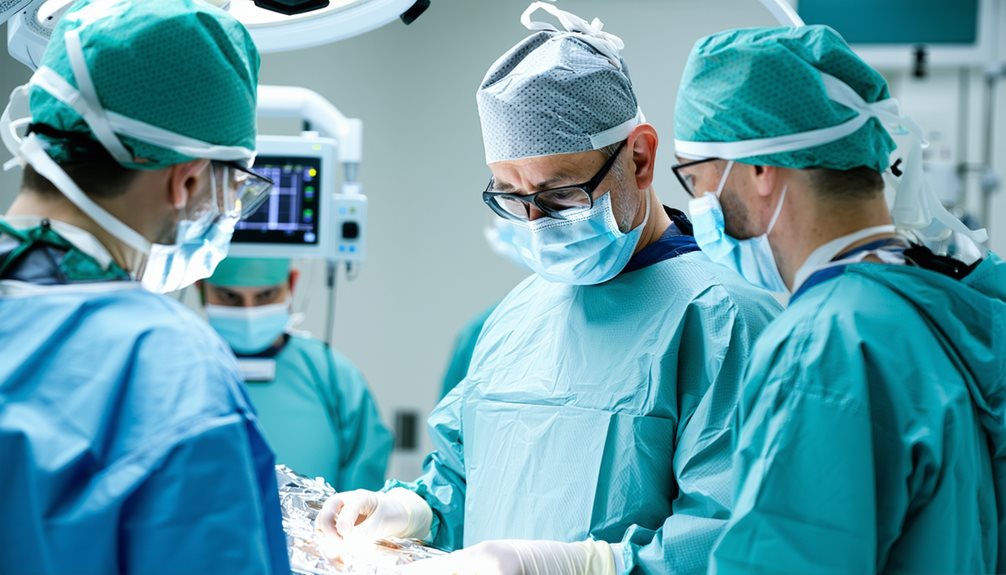
Trusting skilled surgeons with implant procedures is integral due to their rigorous training and extensive understanding of anatomy and surgical techniques. They offer precision in implant placement through advanced methods, including computer-guided surgery and 3D imaging, ensuring accuracy and minimizing complications. Their ability to conduct customized assessments considers factors like bone density and vascular health for tailored treatment plans. Utilization of innovative materials enhances biocompatibility and durability. Skilled surgeons meticulously reduce surgical risks and use state-of-the-art techniques for improved safety and outcomes. Exploring this further will reveal more about the paramount practices and technologies they employ to optimize care.
Advanced Training and Expertise
In the domain of surgical implants, the importance of advanced training and expertise cannot be overstated. The complexity of surgical procedures demands a rigorous foundation in surgical education, guaranteeing that practitioners are well-prepared to navigate the intricacies of implant surgery. This education encompasses a thorough understanding of human anatomy, surgical techniques, and the latest technological advancements in the field.
To substantiate this knowledge, surgeons pursue professional certifications, which serve as a proof of their proficiency and commitment to maintaining the highest standards of patient care. Professional certifications are not mere formalities but integral to a surgeon’s credibility and trustworthiness. These credentials signify that a surgeon has met stringent requirements and is equipped to perform implant surgeries with precision and effectiveness.
Surgeons are encouraged to participate in continuous professional development, attending workshops and engaging with cutting-edge research to remain at the forefront of innovation in surgical practices. This ongoing dedication to surgical education and certification guarantees that surgeons are not only adept at existing techniques but also prepared to integrate new technologies and methodologies.
Consequently, patients can trust that their surgical implant procedures are executed by highly skilled professionals committed to excellence and safety.
Precision in Implant Placement
Precision in implant placement is paramount, relying heavily on advanced surgical techniques that guarantee ideal outcomes.
Customized treatment plans tailored to individual anatomical variations further enhance accuracy, reducing the potential for complications.
Advanced Surgical Techniques
The evolution of advanced surgical techniques has greatly elevated the precision of implant placement, ensuring ideal outcomes for patients. Through the integration of minimal invasive procedures, surgeons can now execute implant placements with unparalleled accuracy, considerably reducing recovery times and enhancing patient comfort.
These surgical innovations have revolutionized the field, employing state-of-the-art technology such as computer-guided surgery and 3D imaging. These tools allow for meticulous pre-surgical planning, granting surgeons the ability to visualize the surgical site in three dimensions, which translates to increased precision during the actual procedure.
Moreover, the adoption of robotic-assisted surgery has further enhanced the surgeon’s ability to perform with exceptional dexterity and control. By utilizing robotic systems, surgeons can achieve a level of precision that surpasses human capability, minimizing the margin for error and optimizing implant positioning.
This technological advancement not only improves the longevity and functionality of the implants but also contributes to a faster healing process for patients.
Customized Treatment Plans
Building upon advanced surgical techniques, the customization of treatment plans is pivotal in achieving precision in implant placement. The intricate nature of implant surgery necessitates a tailored approach that aligns with individual patient needs and treatment goals.
Skilled surgeons adept at developing customized treatment plans guarantee that each procedure is meticulously planned and executed. By leveraging cutting-edge technology, such as digital imaging and 3D modeling, surgeons can map out the precise anatomical landscape of a patient’s oral cavity. This allows for ideal implant positioning, enhancing both functionality and aesthetics.
Precision in implant placement is additionally achieved through a thorough assessment of the patient’s oral health, bone density, and structural integrity. These assessments are integral to formulating a treatment strategy that minimizes complications and maximizes outcomes.
Moreover, personalization extends to selecting the appropriate implant type and size, which is critical in meeting specific patient needs.
Customized treatment plans are not just a procedural blueprint; they are the cornerstone of successful implantology. By prioritizing innovation and precision, skilled surgeons can transform patient-specific challenges into opportunities for exceptional, long-lasting results, thereby aligning with the overarching treatment goals of restoring oral function and enhancing quality of life.
Minimizing Surgical Risks
Achieving ideal outcomes in implant surgery requires a meticulous focus on minimizing surgical risks. Precision in implant placement is paramount, and this necessitates the surgical experience that seasoned professionals bring to the operating table. An adept surgeon employs advanced imaging technologies, such as 3D cone beam computed tomography (CBCT), allowing for detailed visualization of the anatomical structures. This precision-guided approach guarantees optimal alignment and placement of implants, thereby reducing the likelihood of complications.
Effective risk management in implant surgery also involves the implementation of state-of-the-art techniques and best practices that are continuously refined through ongoing education and research. Surgeons with extensive experience are adept at identifying potential risk factors pre-operatively and devising tailored strategies to mitigate these concerns. This includes evaluating bone quality, understanding patient-specific anatomical variations, and anticipating potential challenges.
Furthermore, skilled surgeons prioritize aseptic techniques to minimize the risk of infection, while employing minimally invasive procedures to reduce recovery time and enhance patient outcomes. Their thorough understanding of implant biomechanics and tissue integration guarantees that the implants perform as intended, offering patients not only a functional solution but also a technologically advanced intervention that aligns with the highest standards of surgical practice.
Comprehensive Patient Assessment
Why is a thorough patient assessment pivotal in the field of implant surgery? A detailed evaluation guarantees that the patient’s unique physiological and anatomical characteristics are meticulously understood, thereby optimizing surgical outcomes and safety.
Skilled surgeons rely on an in-depth patient history to uncover critical insights into previous medical conditions, allergies, and any medications that may impact the surgical process.
Physical evaluation is another cornerstone of detailed assessment, requiring precision and expertise.
This evaluation encompasses a detailed analysis of bone density, vascular health, and soft tissue conditions, all of which are essential to tailoring the surgical approach to each patient’s needs.
In the field of implant surgery, where precision is paramount, thorough patient assessment serves as the foundation upon which successful surgeries are built.
Cutting-Edge Technology Use
In implant surgery, the integration of cutting-edge technology is transforming traditional practices by enhancing precision and improving patient outcomes. The deployment of robotic assistance in surgical procedures exemplifies this transformation. Robotic systems offer unparalleled accuracy, allowing surgeons to perform complex implant placements with minimal invasiveness.
These systems utilize advanced imaging and navigation technologies, facilitating real-time adjustments during surgeries. This precision reduces human error and optimizes implant positioning, thereby enhancing the functional and aesthetic results for patients.
Furthermore, the development and application of innovative materials have revolutionized implant surgery. These materials, often engineered at the nanoscale, exhibit superior biocompatibility and durability. They integrate seamlessly with biological tissues, promoting osseointegration and reducing the risk of postoperative complications.
Titanium alloys and bioactive ceramics, for instance, are increasingly used for their structural integrity and ability to facilitate bone growth.
The fusion of robotic assistance with innovative materials consequently represents a paradigm shift in implant surgery, ensuring that procedures are not only more precise but also tailored to the individual physiological needs of patients. This synergy is central to advancing surgical methods and aligns with the broader objective of enhancing patient-centric care in the medical field.
Enhanced Safety and Success Rates
Building upon the advancements in technology and materials, implant surgeries now demonstrate greatly enhanced safety and success rates. This progression is attributable to the integration of cutting-edge techniques and high-quality biomaterials, which have revolutionized the field.
As a result, patients experience markedly increased satisfaction due to reduced complication rates and improved long-term outcomes. Pioneering methods, such as computer-assisted surgical planning and minimally invasive techniques, have been instrumental in achieving these advancements.
These innovations guarantee precision, minimize tissue trauma, and facilitate faster recovery times.
The emphasis on enhanced safety and success rates evokes a strong emotional response in patients and their families:
- Peace of Mind: Knowing that implant surgeries have become safer provides an immense relief.
- Hope for the Future: High success rates promise better long-term outcomes and quality of life.
- Empowerment through Innovation: Access to state-of-the-art procedures offers patients renewed confidence.
Skilled surgeons, equipped with specialized training and experience, are at the forefront of this transformative era. Their expertise is vital in steering complex implant procedures, guaranteeing ideal alignment and integration of implants with the body.
This not only maximizes patient satisfaction but also assures the longevity and durability of the implants.
Personalized Post-Operative Care
Often overlooked yet critically important, personalized post-operative care plays a pivotal role in the overall success of implant surgeries. This tailored approach guarantees patient recovery is optimized through meticulous monitoring and individualized interventions.
Skilled surgeons, equipped with advanced techniques and a deep understanding of patient-specific needs, implement a thorough post-operative support plan. This plan is designed to mitigate complications, accelerate healing, and enhance the long-term functionality of the implant.
In the domain of modern surgical innovation, personalized care extends beyond the operating room. It encompasses the integration of cutting-edge technologies, such as telehealth monitoring and AI-driven analytics, to track patient recovery in real-time.
This proactive approach allows for timely adjustments to rehabilitation protocols, making certain each patient receives the precise care required. Additionally, personalized post-operative care fosters a collaborative relationship between the surgical team and patient, enhancing adherence to prescribed regimens and ultimately improving outcomes.
As the medical field continues to evolve, the emphasis on personalized post-operative care underscores the necessity for surgeons skilled in both technical prowess and holistic patient management.
In doing so, they not only advance the standard of care but also contribute greatly to the transformative journey of patient recovery.
Frequently Asked Questions
How Do Skilled Surgeons Handle Complications During Implant Surgery?
Skilled surgeons adeptly manage complications during implant surgery through advanced techniques and real-time decision-making. Their expertise in complication management guarantees minimal disruption, promoting ideal surgical recovery and fostering innovative approaches to enhance patient outcomes and procedural success.
What Qualifications Should I Look for in a Skilled Implant Surgeon?
When selecting a skilled implant surgeon, prioritize surgical experience and board certification. These qualifications guarantee the practitioner possesses advanced technical proficiency and adheres to rigorous standards, fostering innovative, safe, and effective outcomes in complex surgical procedures.
How Do Skilled Surgeons Manage Patient Anxiety Before Implant Procedures?
Skilled surgeons manage patient anxiety before implant procedures through thorough patient education, employing evidence-based strategies for anxiety reduction. This includes clear communication, preoperative counseling, and innovative techniques tailored to individual needs, ensuring a calm, informed patient experience.
Are There Specific Implants That Skilled Surgeons Prefer Using?
Skilled surgeons often prefer specific implant materials and surgical techniques that align with cutting-edge advancements. They assess material biocompatibility and structural integrity, ensuring ideal patient outcomes through innovative, minimally invasive procedures tailored to individual anatomical and physiological requirements.
What Role Does Patient Feedback Play in a Surgeon’s Implant Practice?
Patient feedback plays a critical role in a surgeon’s implant practice by directly influencing patient satisfaction levels and guiding improvements. Feedback importance is evident in tailoring techniques and selecting innovative materials, thereby enhancing procedural outcomes and patient trust.
Conclusion
Trust in skilled surgeons for implant procedures is justified by their advanced training and expertise, which guarantees precision in implant placement. Thorough patient assessment allows for tailored treatment plans, while the use of cutting-edge technology enhances procedural accuracy. These factors contribute to enhanced safety and higher success rates. Additionally, personalized post-operative care guarantees peak recovery and long-term implant success. Consequently, skilled surgeons are indispensable in achieving superior outcomes in implant procedures.

