
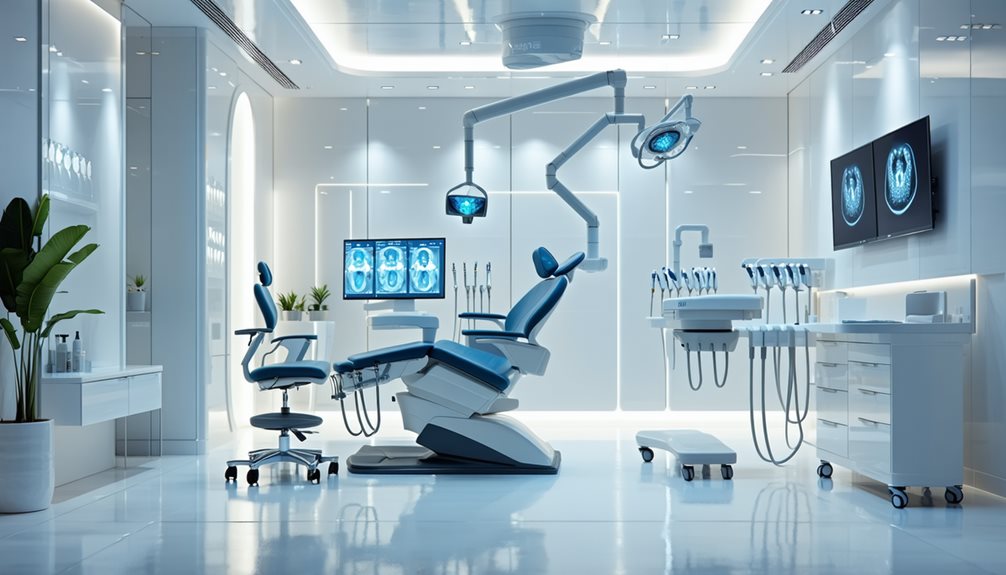
Top oral surgery centers leverage cutting-edge technology to enhance both patient care and surgical precision. These centers employ advanced imaging techniques like 3D scanning and digital impressions to guarantee accurate diagnostics and treatment planning. Minimally invasive and robotic-assisted surgeries reduce trauma, improve recovery times, and increase procedural accuracy. State-of-the-art facilities boasting the latest equipment, such as high-definition microscopes and laser technology, further optimize surgical outcomes. Expert surgeons, committed to lifelong learning, utilize these innovations to provide extensive, personalized care. For insights into how these advancements set new benchmarks in oral surgery, one might want to explore further.
Advanced Imaging Technology
In the domain of oral surgery, advanced imaging technology has revolutionized the way dental professionals diagnose and treat complex conditions. At the forefront of this technological leap are 3D scanning and digital impressions, which have notably enhanced the precision and efficiency of surgical planning and execution.
Unlike traditional methods that often relied on manual impressions and two-dimensional imaging, 3D scanning provides a thorough and highly accurate representation of a patient’s oral anatomy.
Digital impressions, in particular, have drastically reduced the margin for error, offering a virtual model that can be manipulated and analyzed in detail. This allows for a more tailored approach to treatment planning, ensuring that prosthetics and surgical interventions are custom-fit to the patient’s unique oral structure.
Adopting these technologies not only increases diagnostic accuracy but also improves patient outcomes by minimizing the need for corrective procedures.
Additionally, digital impressions and 3D scanning facilitate better communication between dental professionals and laboratories, streamlining the workflow and reducing turnaround time.
As a result, the integration of advanced imaging technology in oral surgery is undeniably paving the way for more innovative, precise, and patient-centric care.
Minimally Invasive Procedures
Building on the advancements in imaging technology, minimally invasive procedures have emerged as a significant trend in oral surgery, offering substantial benefits to both patients and practitioners.
These procedures represent the forefront of surgical innovations, designed to reduce trauma, minimize recovery time, and enhance overall patient experience. Utilizing state-of-the-art tools and techniques, such as laser technology and micro-instruments, oral surgeons can perform complex operations with increased precision and reduced risk.
One of the primary patient benefits of minimally invasive procedures is the reduction in post-operative discomfort. Smaller incisions lead to less bleeding, swelling, and pain, allowing for a quicker return to normal activities.
In addition, these techniques often result in shorter hospital stays and lower overall healthcare costs, appealing to both patients and healthcare systems.
For practitioners, the integration of minimally invasive methods enhances surgical outcomes and patient satisfaction. Advanced imaging techniques enable surgeons to plan and execute procedures with greater accuracy, ensuring ideal results.
As a result, oral surgery centers that prioritize these surgical innovations are not only improving patient care but also positioning themselves at the cutting edge of medical practice.
This trend underscores the evolving landscape of oral surgery, where technology and patient-centric care converge.
Robotic-Assisted Surgery
In the domain of oral surgery, robotic-assisted techniques are revolutionizing patient outcomes through enhanced precision and accuracy.
These advanced systems facilitate minimally invasive procedures that not only minimize the physical impact on patients but also greatly reduce recovery times.
Precision and Accuracy Enhancements
Robotic-assisted surgery represents a significant advancement in oral surgery, offering unprecedented precision and accuracy. At the forefront of this innovation is the integration of computer aided design (CAD) and surgical simulation, which collectively enhance the planning and execution of surgical procedures.
CAD technology allows for the creation of detailed 3D models of a patient’s oral anatomy, providing surgeons with a thorough blueprint to guide their actions. This meticulous planning stage guarantees that every incision and movement is calculated, minimizing the margin for error.
Surgical simulation complements CAD by providing a virtual environment where surgeons can practice and perfect their techniques before entering the operating room. This cutting-edge approach not only boosts a surgeon’s confidence but also reduces the likelihood of complications during the actual procedure.
The synergy of these technologies results in improved outcomes, shorter recovery times, and enhanced patient satisfaction.
As oral surgery centers continue to embrace these advancements, the potential for further innovations remains boundless. The commitment to precision and accuracy elevates the standard of care, guaranteeing that patients receive the most effective and efficient treatment possible.
In this era of rapid technological advancement, robotic-assisted surgery stands as a proof of the transformative power of innovation in healthcare.
Minimally Invasive Techniques
Beyond enhancing precision and accuracy, the integration of robotic-assisted technology in oral surgery has paved the way for minimally invasive techniques that revolutionize patient care. By employing state-of-the-art robotics, surgeons can now perform complex procedures with enhanced dexterity and control, minimizing the physical trauma typically associated with traditional surgery.
This advancement not only greatly reduces the size of incisions but also guarantees that surrounding tissues are preserved, thereby enhancing patient comfort and reducing the risk of complications.
The impact of robotic-assisted surgery on surgical outcomes is profound. Patients benefit from a marked decrease in intraoperative blood loss and a lower incidence of postoperative infections, contributing to a smoother and more predictable recovery process.
Additionally, the precision of robotic systems assists surgeons in achieving ideal alignment and placement, which is vital for procedures such as dental implants or corrective jaw surgery. As a result, the likelihood of long-term success and patient satisfaction is significantly improved.
Recovery Time Reduction
A notable advantage of robotic-assisted surgery in oral surgery centers is the significant reduction in patient recovery time. This advanced technology leverages precision and control, enabling surgeons to perform complex procedures with minimal disruption to surrounding tissues.
The enhanced accuracy of robotic systems reduces the extent of surgical trauma, which translates directly into faster healing processes. Patients can typically resume their daily activities sooner compared to traditional methods, marking a substantial improvement in post-operative outcomes.
Robotic-assisted surgery not only shortens recovery time but also enhances pain management. The precision of robotic instruments minimizes inflammation and discomfort, thereby reducing the reliance on pain medications.
This aspect of cutting-edge technology is particularly beneficial for patients, as it promotes a more comfortable recovery experience and mitigates the risks associated with prolonged medication use. Additionally, the technology supports superior surgical outcomes, contributing to overall patient comfort and satisfaction.
State-of-the-Art Facilities
State-of-the-art facilities in oral surgery centers are revolutionizing patient care with the integration of advanced imaging technology and modern surgical equipment.
These innovations allow for precise diagnostics and minimally invasive procedures, enhancing treatment outcomes and patient safety.
Advanced Imaging Technology
In recent years, oral surgery centers have embraced advanced imaging technology, greatly enhancing diagnostic precision and treatment planning. This innovation is pivotal in achieving superior patient outcomes and minimizing procedural risks.
At the forefront is 3D imaging, which has revolutionized how surgeons visualize anatomical structures. Unlike traditional methods, 3D imaging provides a thorough view, ensuring unparalleled diagnostic accuracy. This capability allows for meticulous assessment and tailored treatment strategies, catering to individual patient needs.
Leading oral surgery centers integrate various state-of-the-art imaging technologies to elevate their service offerings.
Here are three significant advancements:-
Cone Beam Computed Tomography (CBCT): CBCT offers high-resolution, three-dimensional images of the oral and maxillofacial region.
Surgeons utilize these images to accurately diagnose and plan complex procedures such as implant placements and reconstructive surgeries.This may also be of interest to you -
Digital Intraoral Scanners: These devices create precise digital impressions of the oral cavity without the need for traditional molds, enhancing patient comfort and expediting the diagnostic process.
-
Panoramic Radiography: This technology captures broad images of the entire mouth in a single shot, providing invaluable insights into dental and skeletal structures.
Modern Surgical Equipment
Modern oral surgery centers are defined by their integration of cutting-edge surgical equipment, which greatly enhances procedural efficiency and patient safety. The adoption of surgical innovations, such as laser technology and robotic-assisted systems, has transformed conventional oral surgery practices.
These state-of-the-art facilities are equipped with tools that minimize invasive techniques, thereby reducing recovery times and improving patient outcomes.
In the area of dental advancements, 3D printing technology plays a pivotal role. This innovation allows for the creation of precise surgical guides and custom implants tailored to individual patient needs, guaranteeing accuracy and comfort.
Additionally, the use of high-definition surgical microscopes provides oral surgeons with enhanced visibility, allowing for meticulous execution of complex procedures.
Moreover, advanced sterilization systems guarantee that the surgical environment remains hygienic and free from contamination, further safeguarding patient health.
The integration of digital CAD/CAM systems streamlines the process of designing and milling dental restorations, facilitating a seamless shift from diagnosis to treatment.
These modern surgical equipment innovations not only elevate the standard of care but also empower oral surgeons to deliver more effective and personalized treatment plans.
As technology continues to evolve, oral surgery centers remain at the forefront of delivering cutting-edge healthcare solutions.
Expert Oral Surgeons
A team of highly skilled oral surgeons is vital to the success of any cutting-edge oral surgery center. These professionals bring a wealth of surgical expertise and a commitment to continuous learning, guaranteeing they are always at the forefront of the field.
Their ability to employ expert techniques not only enhances the quality of care provided but also maximizes the effectiveness of advanced technology within the facility.
The role of expert oral surgeons in such centers can be categorized into three core areas:
-
Innovation in Procedures: Expert oral surgeons are adept at pioneering new approaches that reduce recovery times and improve patient outcomes. Their surgical expertise allows them to implement procedures that were previously considered too complex or risky.
-
Skillful Integration of Technology: These surgeons are not just practitioners but also innovators who integrate cutting-edge technology with traditional practices. This synergy guarantees that patients receive the most effective and efficient treatments available.
-
Ongoing Professional Development: A commitment to lifelong learning is essential for maintaining surgical expertise. Surgeons frequently engage in advanced training and workshops to refine their skills and stay updated with the latest advancements in oral surgery.
Comprehensive Patient Care
Delivering thorough patient care is at the heart of any cutting-edge oral surgery center, ensuring that each patient receives personalized attention and treatment. Such centers prioritize patient support, recognizing that ideal outcomes are achieved through a holistic approach that addresses both clinical and emotional needs.
By integrating advanced technology with compassionate care, these centers tailor treatment plans to the unique requirements and preferences of each individual, enhancing the overall patient experience.
Extensive patient care in these centers goes beyond the surgical procedure itself. It encompasses pre-operative consultation, detailed treatment planning, and post-operative follow-up, all of which are essential for successful recovery.
The use of digital imaging and 3D modeling allows surgeons to design precise, personalized treatment strategies, minimizing risks and maximizing effectiveness. Additionally, patient support is extended through educational resources, ensuring that patients are well-informed and confident in their care journey.
This commitment to personalized treatment is complemented by a multidisciplinary team approach, where oral surgeons collaborate with other specialists to offer integrated care solutions.
Such a framework fosters innovation, consistently driving the evolution of patient care standards. In this way, cutting-edge oral surgery centers set a benchmark in extensive patient care that others aspire to achieve.
Frequently Asked Questions
What Are the Typical Costs for Oral Surgery at These Centers?
The typical expenses for oral surgery vary considerably, influenced by surgery pricing factors such as complexity, technology utilized, and center reputation. Innovative centers often charge premium rates due to advanced techniques and equipment, enhancing patient outcomes and experiences.
How Do These Centers Handle Emergency Oral Surgery Situations?
In emergency oral surgery situations, centers employ robust emergency protocols and maintain surgical preparedness. This includes immediate triage, advanced diagnostic tools, and expert surgical teams, ensuring swift, effective response to critical cases, prioritizing patient safety and recovery outcomes.
Are There Payment Plans Available for Expensive Procedures?
Many centers offer financing options and accept diverse insurance coverage, facilitating access to advanced oral surgery procedures. Patients can explore tailored payment plans, ensuring innovative care remains accessible despite the high costs associated with cutting-edge treatments.
What Is the Average Recovery Time After Surgery?
The average recovery time after oral surgery varies, typically ranging from a few days to two weeks. Recovery tips and an extensive rehabilitation process, including proper diet and medication management, can greatly enhance healing and overall recovery experience.
Do These Centers Accept International Patients for Treatment?
International patient eligibility varies by center, but many offer extensive treatment accommodations. These facilities often provide seamless integration of services, ensuring a streamlined experience for international patients seeking advanced care and innovative solutions within oral surgery.
Conclusion
The integration of advanced imaging technology, minimally invasive procedures, and robotic-assisted surgery, alongside state-of-the-art facilities, underscores the transformative progression in oral surgery centers. These innovations not only enhance surgical precision but also improve patient outcomes and recovery times. The presence of expert oral surgeons further guarantees high standards of care. Thorough patient care remains a cornerstone, emphasizing the holistic approach adopted by these centers. Collectively, these advancements position top oral surgery centers at the forefront of modern medical practice.

